
Simple Ways to Improve Your Citation Score in Academic Research
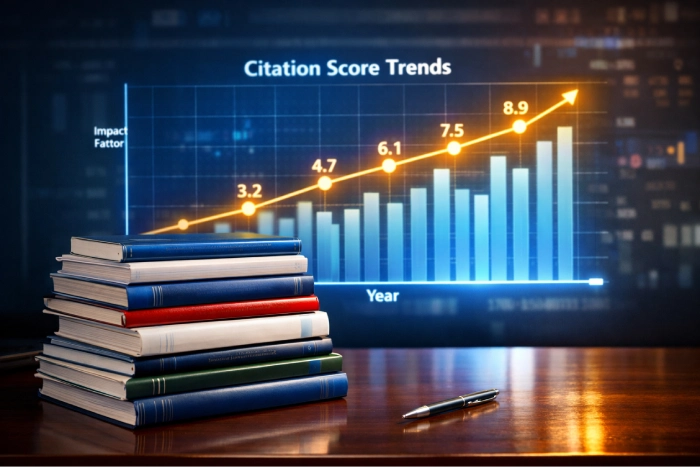
In academic research, citation score is one of the most important indicators of scholarly influence and long-term research visibility. Universities, grant agencies, journal editors, and hiring committees often review citation-based metrics to evaluate the reach and credibility of a researcher’s work. Whether the focus is total citations, h-index, i10-index, or field-weighted citation impact, stronger citation performance usually reflects that other scholars are actively engaging with the research. The good news is that improving citation score does not require shortcuts or artificial tactics. Instead, it depends on publishing strategically, increasing discoverability, and making research easier for others to find, read, and reference. Studies consistently show that title clarity, discoverability, data sharing, and early dissemination can all improve citation performance over time.
Choose Research Topics with Long-Term Demand
One of the simplest ways to improve citation score is selecting topics that solve active problems in your field. Papers on emerging, policy-relevant, or interdisciplinary subjects naturally receive more scholarly attention because they stay relevant for years.
Researchers should focus on:
- unresolved research gaps
- trending technologies
- sustainability challenges
- healthcare innovation
- education reforms
- AI and data-driven methods
When the topic connects with ongoing debates, more future researchers are likely to cite it. Highly demanded topics also increase the chances of being included in review papers and meta-analyses, which further strengthens citation growth.
Write Search-Friendly Titles and Abstracts
A paper cannot be cited if researchers cannot find it.
Your title and abstract should include the exact keywords scholars are likely to search in academic databases. Short, clear, and precise titles tend to perform better than vague or overly creative ones. Evidence suggests that concise titles with strong keyword relevance can improve discoverability and citation counts.
For example, instead of writing a broad title like A Study on Learning, a stronger version would be AI-Based Personalized Learning Models for University Students.
The abstract should repeat the core keyword naturally in the research objective, method, and conclusion so indexing systems such as Google Scholar, Scopus, and Web of Science can rank the article more accurately.
Publish in the Right Journal, Not Just the Biggest One
Many researchers assume only top impact-factor journals improve citations. In reality, the best journal is the one where your target audience actively reads and publishes.
A niche journal in your exact discipline may generate more relevant citations than a broad high-impact journal where your topic gets lost. Journal selection should consider:
- subject fit
- indexing status
- readership size
- review quality
- open access options
- citation trends within the field
Research support libraries emphasize that audience alignment is one of the strongest drivers of citedness.
Use Open Access Whenever Possible
Open access is one of the easiest ways to increase citation potential.
When readers do not face paywalls, your work becomes accessible to scholars in developing countries, independent researchers, policy professionals, and institutions with limited subscriptions. Greater accessibility directly improves the probability of citations.
Open-access articles are also indexed more widely across repositories, university databases, and public academic search engines. Multiple citation studies show that removing access barriers significantly improves visibility and reference potential.
Build a Strong Google Scholar Profile
A complete Google Scholar profile makes your research easier to discover under your name and ensures all citations are properly tracked.
Researchers should:
- add all publications
- merge duplicate records
- correct author name variations
- upload accepted manuscripts where allowed
- include institutional affiliation
- update keywords and research interests
This improves profile authority and helps your work appear in author-based searches. It also strengthens metrics such as the h-index and i10-index over time. Citation metric guides note that consistent author profiling plays a major role in research visibility.
Publish Review Papers and Methodology Articles
Review papers, systematic reviews, and methodological frameworks usually receive more citations than standard single-study papers.
The reason is simple: future authors often cite reviews to summarize the state of the field, and they cite methods papers when applying the same framework, scale, model, or dataset.
If you have several studies in one niche, converting them into a strong review article can significantly improve citation score growth. Experts on h-index development consistently list review articles among the most effective citation boosters.
Share Preprints and Institutional Repository Versions
Another simple strategy is early dissemination through preprint servers and university repositories.
Preprints allow other scholars to read and discuss your findings before formal publication. This increases early visibility and can lead to citations soon after the journal version is released.
Nature Index reporting highlights that preprint visibility often supports stronger downstream citation performance, especially in fast-moving disciplines.
Institutional repositories also help because search engines can crawl the full text more effectively than some publisher pages.
Promote Your Research After Publication
Publishing alone is not enough. Citation growth often depends on active promotion.
Researchers should share their paper through:
- LinkedIn academic communities
- ResearchGate updates
- conference presentations
- university profile pages
- lab websites
- email newsletters
- X or professional social platforms
The goal is not marketing for vanity, but ensuring the right scholars know the work exists. Better awareness increases reading, discussion, and eventual citation.
Collaborate Across Disciplines
Interdisciplinary papers often attract citations from multiple subject areas, which naturally broadens the citation pool.
For example, a healthcare AI study may receive citations from medicine, computer science, data analytics, and policy research. The wider the relevance, the larger the potential citation network.
Collaboration with international researchers can also improve visibility because the paper reaches multiple institutions and academic circles.
Cite Your Previous Relevant Work Ethically
Ethical self-citation is another legitimate way to improve citation score.
When your previous studies directly support the current research question, citing them helps create a connected research stream. This improves continuity and helps readers trace the development of your expertise.
However, self-citations must always be relevant and academically justified. Excessive or manipulative self-citation can harm credibility. Best-practice guidance strongly supports moderate, context-based self-citation only where genuinely useful.
Improve Writing Quality and Readability
Poorly written papers receive fewer citations because readers struggle to understand the contribution.
Clear academic writing, stronger visual presentation, better figure captions, and logical discussion flow all improve readability. Studies in scholarly communication show that papers written in more understandable language are cited more frequently because the ideas are easier to absorb and reuse.
This is why professional journal editing, title optimization, and abstract refinement can indirectly support citation growth.
Keep Publishing Consistently in One Research Niche
Researchers with stronger citation profiles usually publish consistently in a focused niche rather than scattering across unrelated topics.
A connected body of work helps establish topical authority. When multiple papers address one theme, future authors often cite several of them together, strengthening cumulative citation growth.
This strategy also supports stronger h-index progression because multiple papers begin crossing citation thresholds together.
Use Strong Keywords in Your Paper Metadata
Another effective way to improve citation score is optimizing the metadata of your research paper. Many researchers focus only on the title and abstract, but keywords, author profiles, affiliations, and even funding information also influence discoverability in academic databases.
Using field-specific keywords that other scholars frequently search can help your paper rank better in platforms like Google Scholar, Scopus, and Web of Science. Better visibility at the database level naturally increases the chance that other researchers will read and cite your work.
Present Data in a Reusable Way
Citation growth also improves when your results are easy for others to reuse in future studies. Clear tables, well-labeled figures, transparent methodology, and downloadable supplementary material make it easier for scholars to reference your findings.
Researchers often cite papers that save them time in designing methods, comparing benchmarks, or supporting literature review arguments. The easier your paper is to build upon, the stronger its citation potential becomes.
Stay Active in Academic Communities
Long-term citation success is also linked to visibility within research networks. Participating in conferences, webinars, university seminars, and discipline-specific communities helps more scholars become aware of your work.
When researchers repeatedly see your expertise attached to a specific niche, they are more likely to remember and cite your studies in future projects. Academic visibility, therefore, is not only about publication but also about staying active where your research audience gathers.
Final Thoughts
Improving citation score in academic research is less about chasing numbers and more about improving discoverability, accessibility, and scholarly usefulness. By choosing relevant topics, writing search-friendly titles, publishing in the right journals, using open access, sharing preprints, maintaining a strong Google Scholar profile, and building a focused publication stream, researchers can increase citations ethically and sustainably.
The simplest truth is this: papers get cited when they are easy to find, easy to understand, and genuinely useful to future studies. When researchers combine strong science with smart visibility strategies, citation score growth becomes a natural result of academic impact rather than a forced metric target.